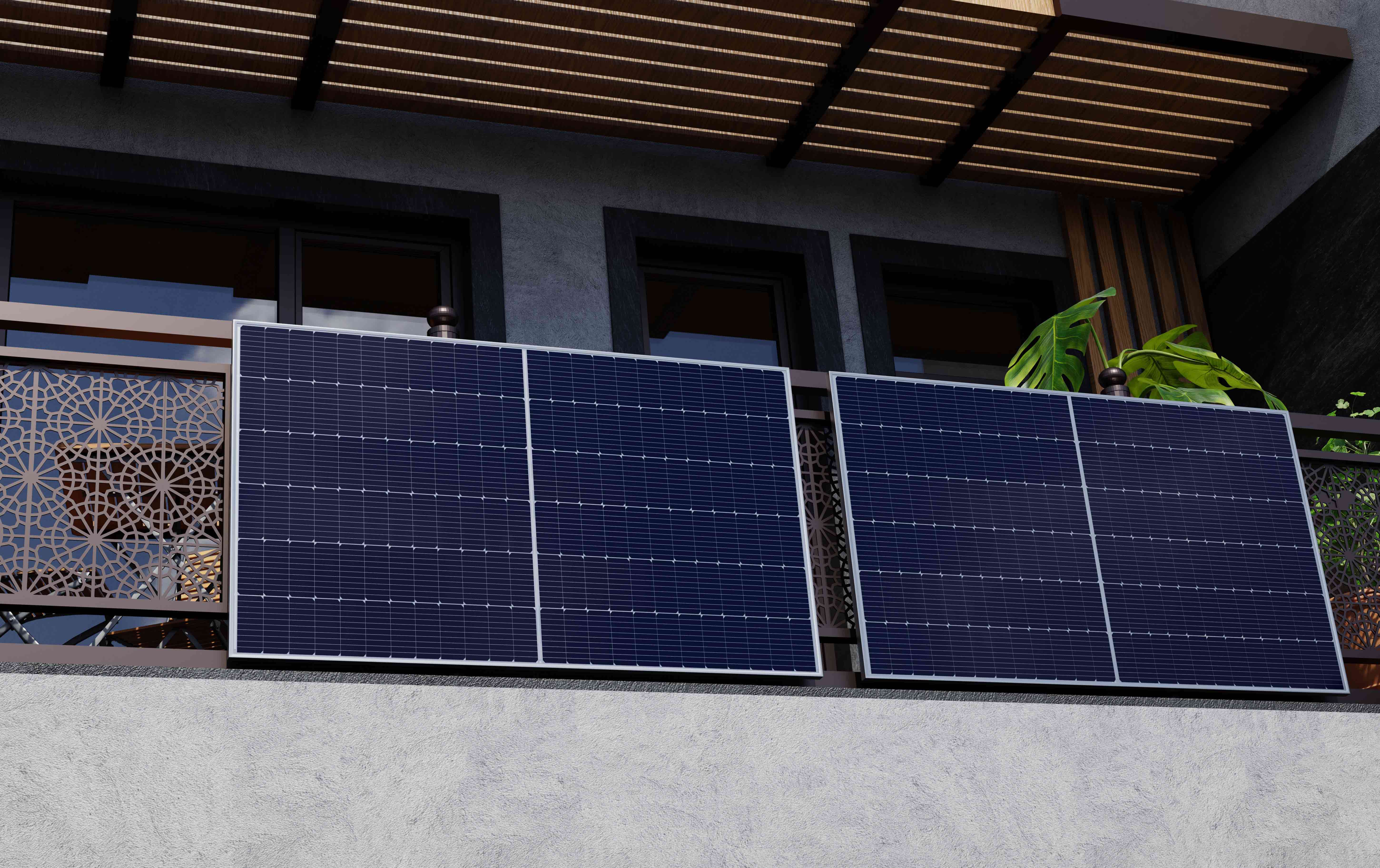
Balcony power plants are small photovoltaic systems that usually consist of only two modules and an inverter and can be easily installed on your balcony. That is why they are also often referred to as "Plug&Play". However, the power of such a plant must not exceed 799 W (inverter power).
How does a balcony solar system work?
The balcony solar system generates electricity with the help of its solar modules and feeds it directly into the domestic power grid. To do this, it is plugged into a normal power socket. The electricity generated can then be consumed directly at home. Any surplus electricity is fed into the public grid, but is not reimbursed.
Technical details of a balcony solar system
The modules must be "CE" certified. A so-called "Wieland plug" (a specialised socket with contacts insulated to the outside) is not mandatory, but is nonetheless recommended for safety reasons.
It is also possible to use second-hand modules that have been professionally refurbished.
As far as the electrical installation is concerned, it must comply with the current safety standards, and in particular it must have a residual-current circuit breaker installed in the circuit.
To ensure that the modules mounted outdoors are not torn off in a storm and that there is no risk of any damage, they must be adequately fastened or fastened with screws.
Ask your municipality about required permits or declarations for the installation of a balcony solar system.
Profitability of a balcony solar system
A balcony power plant can reduce your daily electricity costs and is all the more profitable if you manage to consume the electricity it generates yourself. So check (e.g. on your electricity supplier's customer portal) whether your basic electricity load is sufficient to consume the electricity it would generate. On average, these installations pay for themselves after merely 5 to 6 years and have a comparably low investment barrier, making them fairly accessible and profitable.
Klimabonus subsidies for photovoltaic installations
Balcony solar systems are not currently covered by specific subsidies under the Klimabonus scheme. Klimabonus subsidies apply uniformly to systems with an installed capacity of 2 kWp or more.
Smaller systems, such as typical balcony solar systems below this capacity threshold, are therefore not eligible for subsidies.